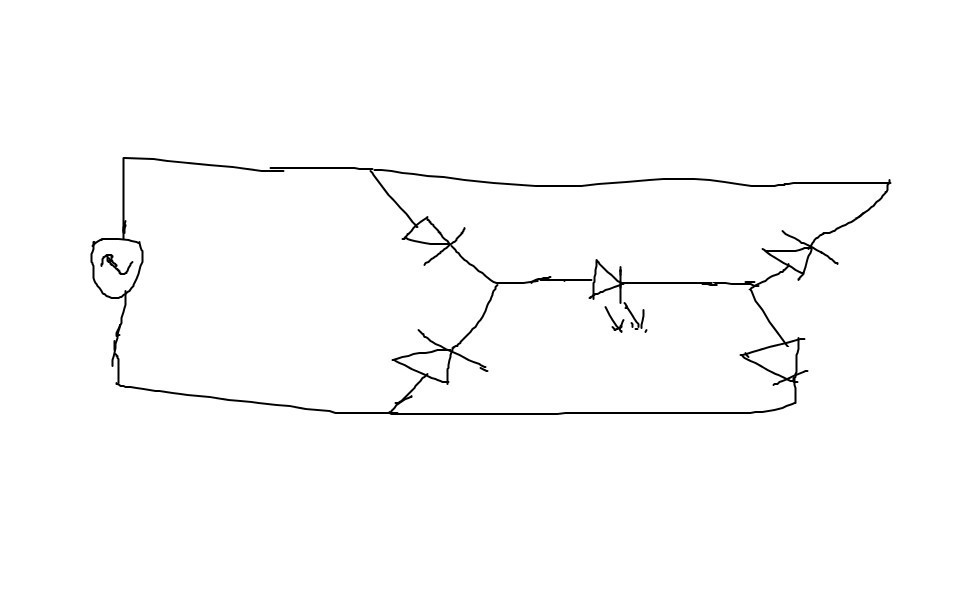
Because we understand this
Yeah...... lol
I can explain what questions you might have about it. If you know how a diode works briefly (they only allow a flow of current in the forward biased direction, where you connect the negative terminal to the cathode (flat edge of the LED) and the positive terminal to the anode, but in reverse bias they don't allow for current flow), then you apply the same principle to a diode.
After all an LED is a diode that emits light.
Longer wavelength LEDs require lower voltages, but even red LED's still require ~2V
This is true as less energy is required to liberate LEDs with longer wavelengths of light emitted.
However on a side note, I've had a green led which I bump up to 9V and it starts emitting orange light instead lol. Cool thing is that the LED doesn't actually pop or burn out if I just tap it for a few seconds or something. I have no idea why it went orange though since orange light has a larger wavelength than green light

Need your help on understanding what is going on with that. And I'm also assuming this particular LED allows all wavelengths of light through rather than cutting off at 590 nm and below as expected of some green LEDs.